Garden Clearance in Shoreditch

Garden clearance in Shoreditch calls for a practical, tidy service that deals with overgrown beds, cuttings, old planters, broken outdoor furniture and general green waste in a way that suits homes, yards and shared outside spaces. We provide a straightforward clearance service focused on removing unwanted garden materials, separating reusable items where appropriate and leaving the area ready for the next stage of work. If you need a one-off tidy-up or a fuller clearance before landscaping, our approach is built around clear communication and careful handling.
The service can include the collection of branches, hedge trimmings, soil, turf, leaves, pots, timber, fencing offcuts and mixed outdoor debris, depending on what is present on site. In some cases the work is mostly green waste; in others it involves heavier or awkward items that need sorting before removal. We tailor the clearance to the space, rather than treating every garden the same, so customers can arrange help for compact courtyards, rear gardens, front patches and communal areas with very different access and storage conditions.
For a straightforward enquiry, it helps to describe the main items that need taking away and mention anything that may affect access, such as steps, narrow passages or shared entrances. If you already know you need related support, you can also compare the scope of garden clearance with our broader outdoor and household removal options before deciding how much work to include in one visit. That makes it easier to plan the collection sensibly and ask for a quotation that reflects the actual job.
Outdoor clearance for overgrown and cluttered spaces
When a garden has become difficult to use, the work often begins with clearing away the obvious build-up: branches, weeds, dead planting, broken pots and other material that has accumulated over time. That first stage creates space for pruning, replanting or simple tidying, but it also reduces the risk of leaving hidden waste behind. We handle the removal side of that process and can work through a garden systematically so the job feels organised rather than rushed.
Different outdoor spaces need different treatment. A paved yard may contain loose debris, old containers and worn timber, while a larger garden may have piles of cuttings, sleepers, damaged trellis or edging that needs lifting carefully. In a confined urban setting, access and carrying distance can matter just as much as the volume of waste. Our service is designed to account for those practical details without turning the process into a complicated task for the customer.
What a clearance can cover
Depending on the site, a garden clearance may involve one or more of the following:
- green waste such as grass cuttings, leaves, weeds and hedge trimmings
- woody waste including branches, prunings and small logs
- old planting materials like pots, trays, bags of compost and empty containers
- outdoor items such as broken chairs, tables, fencing panels or decorative features
- mixed debris gathered during tidying, pruning or minor garden refresh work
Managing mixed garden waste and awkward items

Some clearances are simple, but others involve a mixture of lightweight and heavy materials that need to be handled in different ways. Soil and rubble are not the same as hedge clippings, and old furniture cannot always be loaded in the same way as bags of green waste. We keep the removal practical by sorting items sensibly and planning the order in which they are moved, which helps protect paths, steps and other surfaces from unnecessary scuffs or damage.
If a garden contains items from several small jobs rather than one obvious pile, the work still benefits from a tidy method. For example, a customer may have a few bags of cuttings, a collapsed planter, leftover paving pieces and some rotten timber that all need taking away together. A clear quote is easier to prepare when the mix of materials is understood, especially where weight, volume and access all affect the time required. Clear details save time later and usually lead to a more accurate plan.
We can also help when the outside space is linked to another part of the property, such as a side return, utility entrance or storage area. In those cases, garden clearance may be only one part of a wider tidy-up, and it is worth considering whether the job is best arranged alongside home clearance or another indoor removal service. That way, the work can be grouped logically rather than split into disconnected visits.
Choosing the right clearance approach
Garden work is often easier when the scope is set clearly at the start. Some customers only need the removal of loose waste after pruning or weeding, while others need support with bulky items that have been left outside for some time. We keep the service flexible enough to cover both kinds of request, but we also keep it specific enough that customers know what is being taken away and what is being left in place.
It can be useful to think about the job in terms of priority rather than in terms of every single item. The most urgent part may be the blockage on a path, the pile beside a shed, or the debris preventing further work. Once that has been identified, the rest of the clearance can be planned around it. If the property also needs large household items moved out, a related service such as furniture clearance may suit the non-garden pieces better than trying to fit everything into one general description.
The practical point is simple: the more clearly the waste types are described, the easier it is to arrange the right collection. That is especially true when a garden has been used as temporary storage for objects that do not belong outdoors. Clarity at the quoting stage helps ensure that the collection is matched to the amount and kind of material involved.
Preparing a quotation for your garden clearance

To request a quotation, it helps to outline the main materials, approximate amount and any access points that may affect loading. Photographs can be useful where the garden layout is difficult to describe, but a written summary is also valuable because it highlights what should be removed and what should remain. If there are items that may need separate handling, such as soil, timber or dismantled structures, mention them early so the quote can reflect the likely mix of work.
One well-planned enquiry is usually enough. You do not need to write a long explanation, but it is sensible to include details that matter: whether the waste is bagged or loose, whether any items are wet or heavy, and whether the clearance will involve stairs, shared entrances or restricted parking. That information makes it easier to estimate the labour and transport needed for the job without overcomplicating the process for you.
If the outside space forms part of a larger property project, our pricing and quotes page may be a useful place to compare how different factors are typically considered before you ask for a proposal. As a rule, the more precise the description, the more straightforward the quotation. That benefits both small clearances and larger outdoor tidy-ups where several types of waste have to be removed together.
Garden clearance for homes, landlords and shared spaces
We support a range of property types, from small residential gardens to shared outdoor areas that need regular attention after use by several people. A landlord may want the space cleared between occupancies, while a homeowner may need it dealt with after a season of growth or before a planned improvement. The same core service applies, but the work can differ depending on how the garden is used and how much material has built up.
Shared or multi-occupancy spaces often need an especially organised approach because waste may have been left in more than one corner and access can be awkward. A job might involve a front strip, side access, rear yard and an area near bins or sheds. In those situations, it helps to separate what is garden waste from what is general rubbish so the collection remains efficient. If mixed household items are also involved, a service such as flat clearance may be relevant alongside the outdoor work.
For customers preparing a quotation request, the best starting point is a concise list of what needs removing and a note of any constraints that could affect loading or timing. That information lets us respond in a way that is practical rather than generic. It also makes it simpler to decide whether the task is a small tidy-up or a more involved clearance with several parts.
About Shoreditch
Shoreditch is an inner area of East London, long associated with a mix of trade, creativity and urban change. It sits within the London Borough of Hackney, close to the City of London, and its streets reflect centuries of adaptation from older suburban development to dense modern city life. Historic routes, converted warehouses and newer commercial buildings stand side by side, giving the district a layered character that is easy to notice on foot. The name is strongly linked with Shoreditch High Street and the wider neighbourhood around it, where transport connections and redevelopment have helped shape the present-day streetscape. The area is also known for its relationship with nearby districts such as Hoxton, Spitalfields and Bethnal Green, though Shoreditch retains its own identity through its street patterns, public spaces and cultural landmarks. Old and new architecture sit in close proximity, with surviving church buildings, Victorian terraces, repurposed industrial structures and contemporary office and leisure spaces creating a varied urban fabric. Shoreditch Church, officially St Leonard’s, is one of the area’s best-known historic landmarks, while the broader neighbourhood is also linked with the modern art, design and nightlife scenes that developed more prominently in the late twentieth and early twenty-first centuries. Public spaces and smaller green pockets are interwoven with commercial streets, and the area’s character is often defined by contrasts: busy main roads beside quieter lanes, older masonry beside glass-fronted developments, and informal street art beside protected heritage structures. That mix makes Shoreditch a place with a strong sense of movement and reinvention, yet one still shaped by the long memory of east London’s built environment.
Garden waste handling and sorting
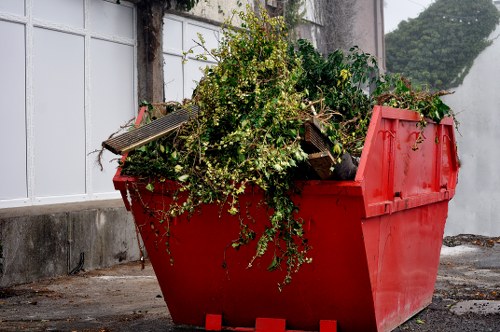
Not every item removed from a garden should be treated in exactly the same way. Green waste, timber, inert materials and general outdoor rubbish can require different handling, so the collection needs to be organised before loading begins. We approach this by separating obvious categories where practical, which helps the work remain orderly and supports sensible disposal after collection. The result is a more controlled clearance rather than a single unstructured lift-out of everything at once.
Customers often value the chance to clear several problem areas in one visit. A border might need cutting back, a shed corner may be full of unusable bits and pieces, and a path may be blocked by items that have been left outside for too long. When these are dealt with together, the garden feels more open and easier to work on afterwards. Where bulky domestic items are part of the same project, furniture disposal may offer a better fit for those pieces than keeping them within a purely garden-focused request.
We also keep in mind the practical limits of outdoor spaces, especially where items have been exposed to weather. Wet waste can be heavier, damaged wood can split during handling, and stacked material can conceal sharp edges or loose fixings. A careful approach reduces the chance of avoidable disruption and makes the whole clearance more manageable.
From overgrowth to a usable space
A garden clearance often marks the point at which an outside area becomes usable again. Once bulky waste, cuttings and unwanted objects are removed, the remaining space can be assessed properly for pruning, repair, planting or simple maintenance. We do not claim to replace horticultural work, but we do remove the material that gets in the way of it. That distinction matters, because many gardens need clearing before they can be improved in any meaningful way.
Some customers are mainly interested in getting the space back under control after a period of neglect, while others want to prepare for a sale, tenancy change or seasonal refresh. In both cases, the important thing is that the clearance is thorough enough to leave a clear starting point. If a large number of loose items has built up in an attached garage or storage area, it may also be worth looking at garage clearance as part of the same overall tidy-up.
Book when you are ready to move the project forward, and use the quotation stage to set out the items that matter most. A well-described request makes it much easier to arrange the right clearance and avoid unnecessary back-and-forth. If there are pieces that can stay and pieces that must go, stating that clearly is always worthwhile.
Requesting the right scale of work
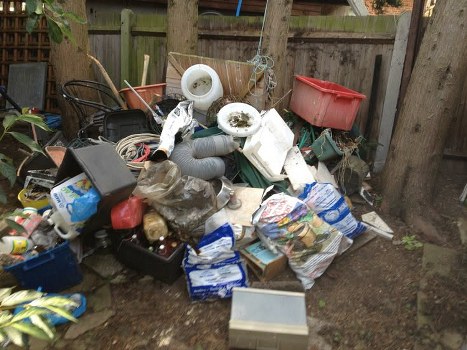
Garden clearance requests vary from a few bags of waste to larger removals involving multiple material types, so the scale of the work matters when planning the job. It is often useful to think in terms of what needs to be removed immediately, what is mixed with other debris and what may need separate handling. That approach helps us understand the work as a whole and gives you a clearer basis for a quotation.
For customers who want to gather everything into one enquiry, a simple checklist can be helpful. Note the obvious waste piles, list any bulky items, mention whether anything is damp or especially heavy, and point out access constraints. Then ask for a quotation based on that information. If the project includes additional indoor removal, the broader waste removal option may be more suitable for combining several parts into one organised request.
To finish, the most useful next step is to decide which items must be removed and which areas need to remain untouched. With that in mind, you can ask for a quotation that reflects the real work rather than a rough guess. Clear scope leads to a clearer price conversation, and it makes the whole process easier from the outset.